
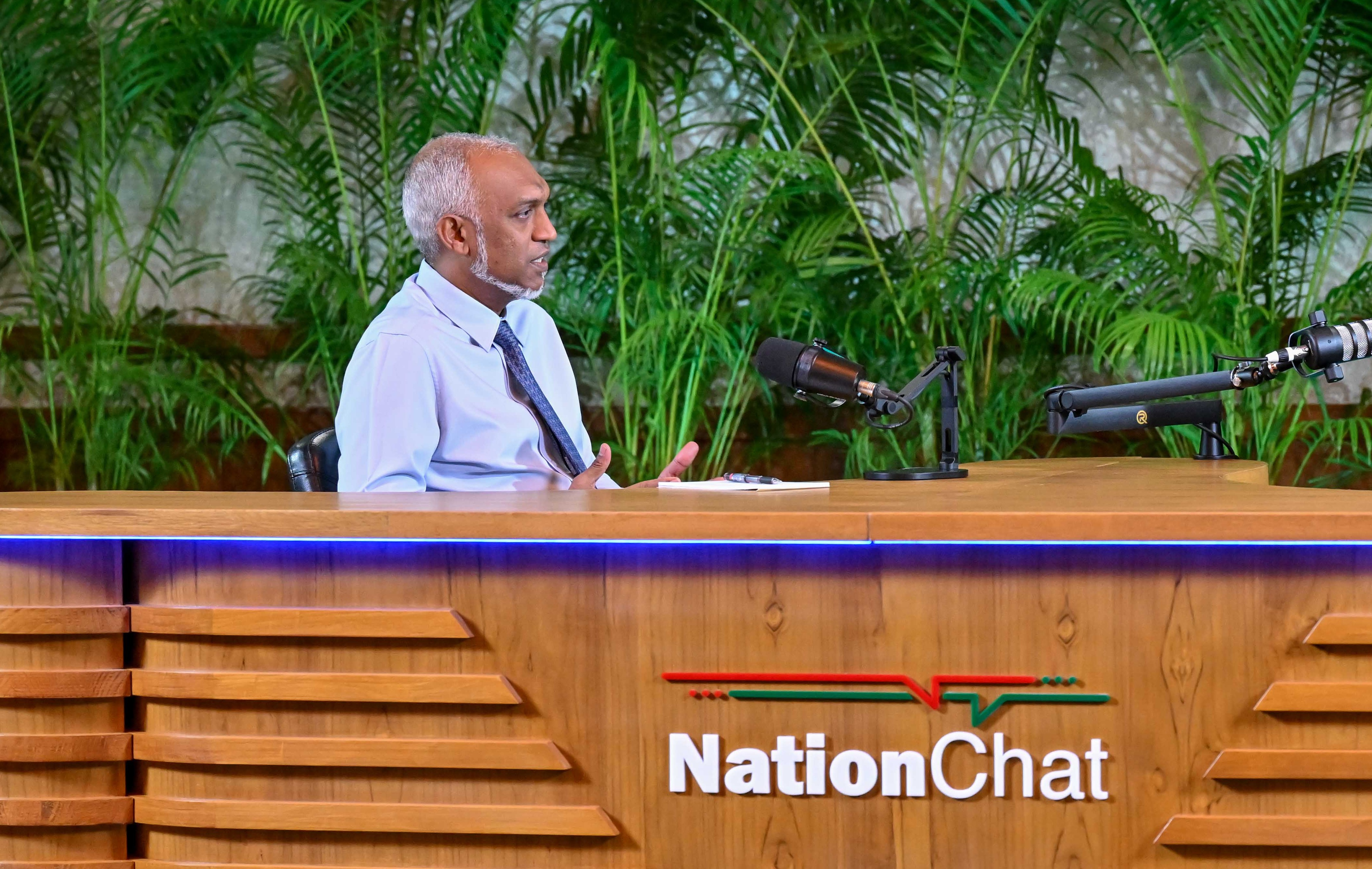
Male’ - President Dr Mohamed Muizzu has said that every applicant who meets the eligibility conditions for housing under the Rasmale project will receive housing opportunities, including plots from the reclaimed area. He made the remarks during the sixth episode of Public Service Media’s “Nation Chat” podcast series.
The President reaffirmed that the Rasmale development project will transform housing prospects and provide Maldivians with secure housing over the next two years. He emphasised that ensuring access to housing for all citizens remains a top government priority. Addressing public concerns about the country’s largest ongoing development project, he said there was no cause for concern and that the project would deliver significant benefits to the people.
The remarks come amid public opposition to the project, with a significant number of citizens voicing concerns over reports of a deal involving the sale or lease of part of Rasmale to UAE-based Eagle Hills for 99 years, including claims that it could allow non-Maldivians to own land.
Muizzu assured that even with foreign investment in the project, housing opportunities reserved specifically for Maldivians would not be affected in any way. Eligible applicants under the various categories who meet the set conditions will receive housing. He also noted that major projects are being financed through innovative arrangements, including models based on future revenue and land-leasing agreements designed to avoid adding further burden to the country’s debt.
Under the government’s “Housing for All” policy covering the Malé region, including Rasmale, 58,505 applications for plots and flats have been submitted. Of these, 35,930 were for flats and 22,575 for plots. The Ministry of Housing is currently verifying the applications.
The President stated that the agreement involving Eagle Hills would not affect housing opportunities reserved specifically for Maldivians. He also said 5,000 flats in Hulhumalé would be allocated to citizens during this term, with the units to be completed and handed over by August 2028.
The Maldives has extremely limited natural land, particularly in densely populated and developed areas. In the Male’ region, almost all newly created land is produced through large-scale, high-cost land reclamation projects. According to reviews by the Auditor General’s Office, land distribution schemes implemented in the Male’ region, especially the Binveriya Scheme, have resulted in losses amounting to several billion rufiyaa to the state and the Housing Development Corporation (HDC). These losses include the opportunity cost of the land (revenue that could otherwise have been generated from alternative uses), infrastructure costs (expenditure on establishing urban facilities), and compensation liabilities. Such losses create long-term fiscal burdens that are ultimately borne by the entire population, either through public debt or by reducing funds allocated to other public services.
Even in countries where land is naturally rich, the free distribution of land from urban and city areas is extremely rare. This is because such allocations are difficult to carry out fairly, create strong incentives for political influence and favouritism in decision-making, and permanently remove valuable state assets from uses that serve genuine needs and essential public services.
Sustainable alternatives therefore include income-targeted schemes that allow affordable purchase or long-term lease, retention of strategic land under state or commercial control, and careful needs-based allocation of land, instead of unconditional free transfers determined by the preferences of those in power at the time in a manner that protects the interests of both the state and all citizens.
Comments
0 publishedNo comments have been published yet.